VINTAGE POINT: Grand River Houses

2016-02-07 15.04.07

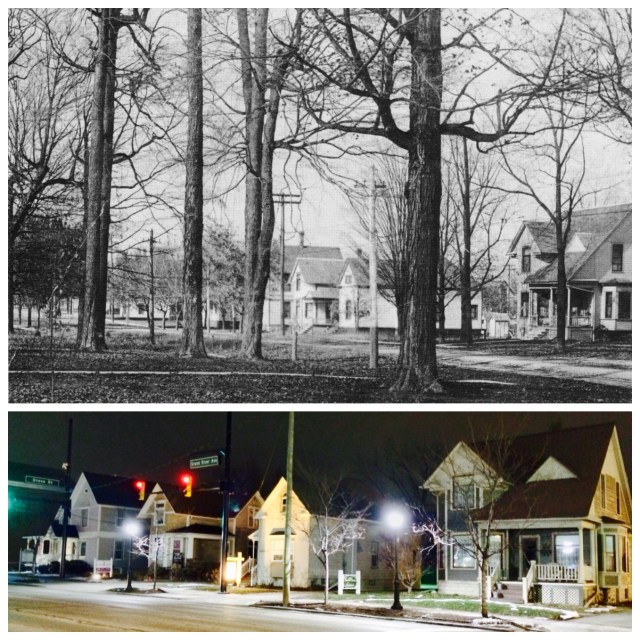
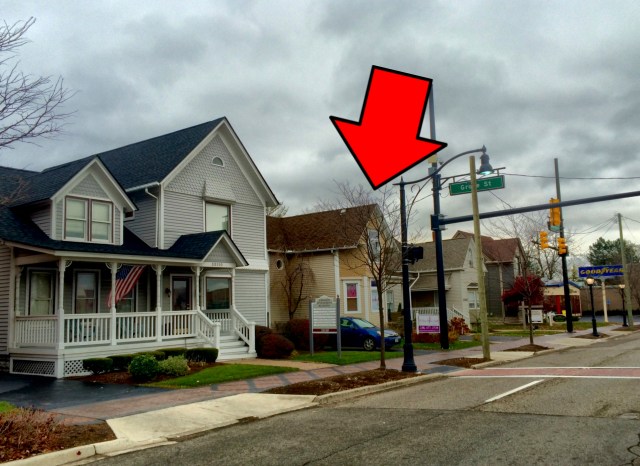
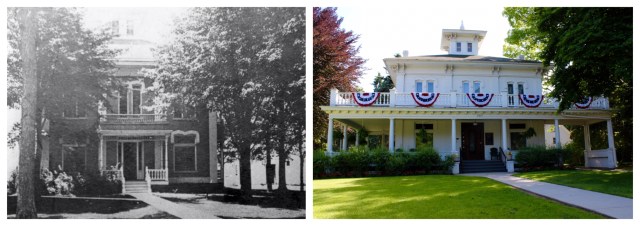
In 1916, Farmington’s downtown streets were lined with residential homes—like these four, across from the Sundquist Pavilion at Grand River and Grove Street. The tree in the foreground stands in what is now Dress Barn in the Downtown Farmington Center.

These houses were the subject of Preservation Farmington’s petition late last year, and remain threatened by some of the Farmington Downtown Area Plan’s concepts that call for their eventual replacement.

Historic photo from Farmington: A Pictorial History by Lee Peel. Contemporary photo by Maria Taylor.

VINTAGE POINT is Preservation Farmington’s photo column, featuring an exclusive focus on Farmington history: a look at our city through the lens of time. Look for Vintage Point every other week in the Farmington Observer and Farmington Voice and on our Facebook and Twitter pages. We’ll also keep an archive of all past issues on our website under the Vintage Point tab.

Posted in Vintage Point | Tagged , , | 1 Comment

JEOPARDIZED: Michigan Historic Districts Under Threat

Updated 4/26/2016

Good news! As of April 26, the House Committee on Local Government has tossed out HB 5232, the bill to stamp out historic districts across the state of Michigan.

Representative Chatfield, the committee chair, has confirmed in a letter to constituents that although he worked “exceedingly hard to strike a balance with this legislation…I have been unable to adequately satisfy many of the concerns of my constituents.” He has decided to “indefinitely suspend consideration of HB 5232 and the conversation of reform to the Michigan Historic Preservation Act.”

There’s still a chance that the bill may be reassigned to another committee, and we’ll have to start the process all over again. But even if that does happen, this is a huge victory for historic preservation in our state. And we owe a huge thank you to all who signed petitions, sent emails, wrote letters and editorials, spoke at hearings, and lobbied our legislators for the cause of historic preservation in the state we call home.


Updated 4/3/2016

Michigan’s heritage is under threat.

It started on January 26, when House Bill 5232 and the identical Senate Bill 720 were introduced into the Michigan legislature by Representative Chris Afendoulis (R-Grand Rapids) and Senator Peter MacGregor (R-Rockford).

At first glance, the bill’s nickname—Historic District Modernization Act—seems innocent enough. Currently, Michigan historic districts operate under Public Act 169 of 1970, the Local Historic Districts Act. According to Afendoulis, the new legislation would “modernize a law written 45 years ago [that] strikes the right balance between protecting private property owners’ rights and historic preservation.” He also claims that it “will help many communities maintain their historic identity while ensuring private property owners have a greater voice.”

That’s not the whole story.

If passed, the proposed amendment to PA 169 (House Bill 5232 and Senate Bill 720) will dramatically change how historic districts are created and maintained in Michigan—and spell a virtual death warrant for historic districts across the entire state.

You can read the entire text of the original bill here, and the substitute bill (accepted 2/24 by the House Committee on Local Government) here. Currently, the bill is in its sixth draft, although that version has not yet been introduced into committee.

Michigan Historic Preservation Network has a great analysis of the changes the bill would create and the issues it raises; you can read it here.

WHAT THIS MEANS

Across the state, city councils are passing resolutions in protest. Historic district commissions and history organizations are crying foul.

In its original form, the bill included provisions to automatically dissolve all historic districts in Michigan (current and future) every 10 years, unless re-approved in a general election. It also required a petition signed by two-thirds of property owners in the historic district before the issue could even be put to vote. And while it threw up barrier after barrier to creating a historic district, it allowed local government to dissolve a district on a moment’s notice–without input from homeowners, area residents, historic district commissions, or the community at large.

Those sections have been removed over the course of the second and third drafts, largely due to enormous pushback on the part of the historic preservation community, Michigan municipalities, organizations and nonprofits, and citizens concerned over the future of our state’s legacy.

But the language that remains, while less threatening than before, is still cause for concern.

Here’s why:

  • It throws away the expertise of historic district commissions and dismisses nationally recognized guidelines that govern the upkeep of historic resources.

Historic district commissions’ decisions could now be based on unspecified guidelines, claimed to be “in the best interest of the community,” instead of the Secretary of the Interior’s Standards. Adopting arbitrary rules is not a reliable choice for protecting historic resources, and it undermines the credibility of historic district commissions, too.

  • It’s misleading.

The bill retains vague,  prejudicial language about “historically accurate rehabilitations costing more” than average work. That’s not always the case. As a matter of fact, some historically accurate repairs–like fixing wooden windows, rather than putting in vinyl replacements–have been proven to be the better investment.

  • It politicizes the appeals process.

Appeals would be made to local elected officials, who may lack background in historical appropriateness and could be swayed by local politics or local development pressures, instead of to experts at the non-partisan State Historic Preservation Review Board.

In short, the bill hopes to take away as much credibility from historic districts as possible, and make them too weak to truly protect Michigan’s historic resources in years to come.

HOW YOU CAN HELP

If you’d rather to see decisions made by experts, not politicians…

If you believe in standing up for the entire community, instead of letting a handful of individuals, developers, and politicians run roughshod over the best interests of the majority…

If you believe that this legislation would be culturally and economically devastating to the state of Michigan…

PLEASE WRITE TO OUR LEGISLATORS and ask them to vote NO on HB 5232 and SB 720–either in their original form, or as amended. Let them know you oppose these measures outright.

To make it easier, we’ve created a petition that automatically sends your message (we’ve included a sample that you can customize) to every state rep and state senator in Lansing, plus Governor Snyder. Sign it today and let them know your concern!

Need some inspiration? We’re maintaining an updated list of all the news coverage supporting the issue.

You can also share the call to action on social media, using the hashtag #SaveYour HD, to encourage others to write in as well.

It’s up to us to let our elected officials know our opinions on the subject before it comes up for a vote. Hearing from just 8 or 10 constituents can have a big impact on legislators, and sending a message only takes about 10 minutes of your time.

Every email, every phone call, every voice counts.

#SaveYourHD

Posted in #SaveYourHD, historic preservation | Tagged , , , | 3 Comments

VINTAGE POINT: Lee Block

vintage point vertical

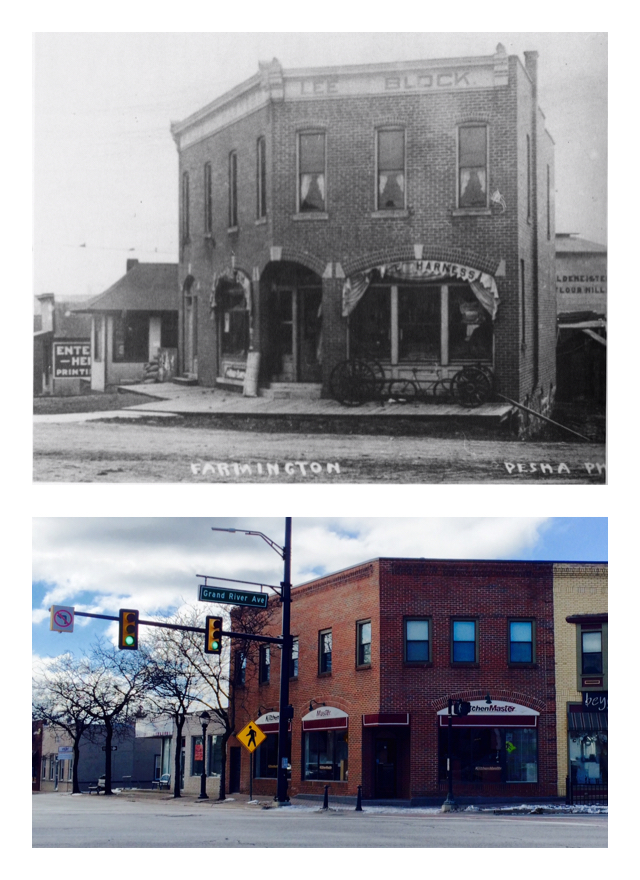
Around 1910, the KitchenMaster store–at the southwest corner of Grand River Avenue and Farmington Road–was part of Lee Block. In its early days, it was home to the H.W. Lee harness store. In the 1950s, it was the Oak Pharmacy, complete with a soda bar and high stools.

33401 Grand River Avenue, Farmington

Historic photo from the Farmington Community Library Heritage Collection. Contemporary photo by Maria Taylor.

VINTAGE POINT is Preservation Farmington’s photo column, featuring an exclusive focus on Farmington history: a look at our city through the lens of time. Look for Vintage Point every other week in the Farmington Observer and Farmington Voice and on our Facebook and Twitter pages. We’ll also keep an archive of all past issues on our website under the Vintage Point tab.

Posted in Vintage Point | Tagged , , , , | Leave a comment

Practical Preservation: Preservation Applied Every Day

Today, we debut a new biweekly feature called Practical Preservation: Old house maintenance tips you can use, with a little education and some conservation thrown in.

What does preservation actually mean? Merriam-Webster lists two simple definitions for the verb “preserve.” First, it means to keep something in its original state or in good condition. It also means to keep something safe from harm or loss.

Preservation doesn’t apply just to structures. It applies to documents, furniture, landscapes, art, streetscapes, green spaces, and much more.

GEORGE WASHINGTON SLEPT HERE

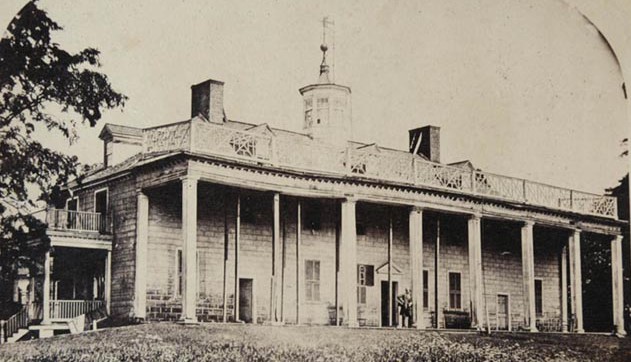
The historic preservation movement began with the establishment of the Mount Vernon Ladies Association by Ann Pamela Cunningham in the early 1850s. At that time, the home of George Washington was languishing on the Potomac River. When Cunningham’s mother realized its state of disarray, she decided that something had to be done.

Mt-vernon-1850s

The original purpose of the Association was to purchase Mount Vernon and restore the house and grounds. In 1860, the Mount Vernon Ladies Association took over the property, and the group remains in existence today. Currently, excavation continues as foundations for older structures continue to be found.

EVOLUTION OF PRESERVATION IN THE UNITED STATES

The 20th century brought a number of important events in the development and progress of historic preservation in the United States. The National Park Service has a timeline of the federal legislation passed since the early 1900s.

1906: The Antiquities Act, America’s first historic preservation act, provided protection of ruins and historic sites and required federal permits for excavation of any sites containing Native American artifacts.

1916: The National Park Service Organic Act created the National Park Service, which encompasses not only parks and green space but also historic structures.

1933: The Historic American Buildings Survey, part of the New Deal, was created during the Great Depression to document historic American buildings. The program still exists and has been expanded to include the Historic American Engineering Record and Historic American Landscapes Survey.

1935: The Historic Sites Act made preserving historic places a national policy.

1966: The National Historic Preservation Act established the National Register of Historic Places, the National Historic Landmarks list, and State Historic Preservation Offices. Section 106 of the legislation created guidelines for federal projects, requiring a preliminary survey of the land to determine if any historical resources are located on it.

1974: The Archaeological and Historic Preservation Act placed responsibility on federal agencies to protect archaeological sites from damage during federal projects.

1976: The Historic Preservation Fund established grants to protect the nation’s cultural heritage.

1977: The Secretary of the Interior’s Standards for Rehabilitation—the national standards used by historic districts, architectural firms, and federal projects today—were finalized and published.

1990: The Native American Graves Protection and Repatriation Act initiated the process of returning Native American cultural items to descendants of the original owners from museums and other entities possessing them. It also created protection for artifacts uncovered during projects on federal or tribal land, and prohibited selling Native American human remains.

NATIONAL HISTORIC PRESERVATION ACT

By far the most important legislation passed has been the National Historic Preservation Act. It is the backbone of historic preservation in the United States.

Michigan’s state-level organization, formed under this act, is the Michigan State Historic Preservation Office.

Although historic registers created under the act are only honorific, providing no legal protection, designees do become eligible for federal grants. More importantly, this legislation spurred states and local municipalities to initiate historic preservation framework at those levels.

PRESERVATION IN FARMINGTON

Guidelines for creating local historic districts were established when Michigan passed Public Act 169 of 1970. Farmington’s local historic district came three years later.

The ordinance established the Farmington Historical Commission, charged with overseeing renovations to homes in the historic district. Originally, Farmington’s ordinance called for the commission to have binding review—the only real way for historic structures to be authentically preserved. However, backlash from homeowners in the district created pressure to water down the ordinance.

Ultimately, the ordinance passed was “toothless,” giving no real protection to the historic structures—and no way for the historical commission to fulfill their stated purpose of preserving architectural elements of historical significance.

Today, the results of this omission are sadly evident. In our historic district, lack of regulation has diminished the architectural integrity of many of our beautiful historic homes and affected the quality of the district at large. Preservation Farmington aims to be involved in bringing about change to the ordinance that will safeguard the district for generations to come.

–by Jena Stacey

Posted in Practical Preservation | Tagged , , , | Leave a comment

Maxfield Redevelopment: A First Look at Proposals

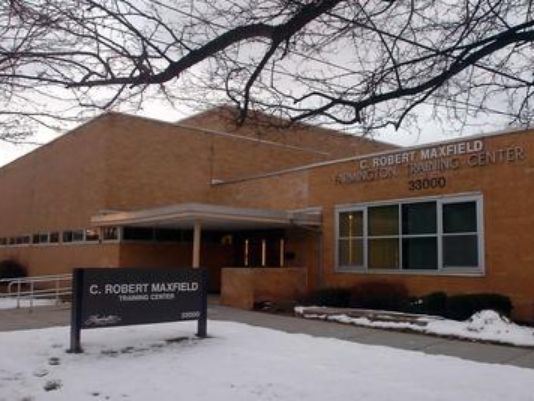
Late last fall, the Maxfield Training Center went on the market as its owner, Farmington Public Schools, sought a developer for the long-vacant surplus property.

B9319755996Z.1_20151120115811_000_GBTCKEB8H.1-0

The 58,675-square-foot building stands on about three acres of land and is located on Thomas Street, a few blocks northeast of the Grand River/Farmington Road intersection.

It’s a project not without controversy. The redevelopment strategy is based on the relatively new Farmington Downtown Area Plan, which calls for the eventual removal of four hundred-year-old houses at Grand River and Grove Street, in front of the Maxfield Training Center–an action which some of Farmington’s history-minded citizens feel would undermine the city’s image as a historic downtown.

One of these four houses–33104 Grand River–was included as an add-on in the sale, giving the developer the option of purchasing the property, removing the house, and incorporating the land.

The request for proposals garnered a grand total two bids. Both developers plan to demolish the outdated school building (not historic) and replace it with housing.

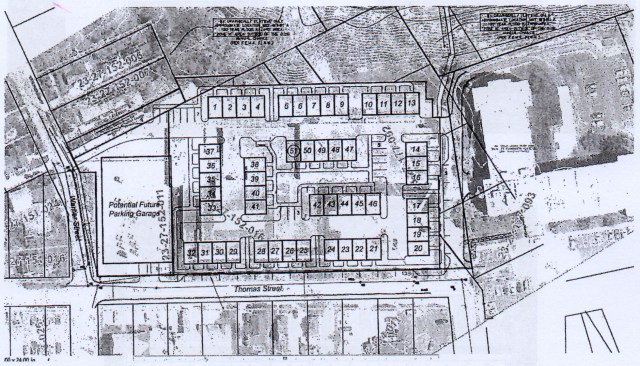
Here’s a look at their conceptual site plans.

Illustrations are taken from proposals submitted to the Farmington Public Schools.

TOWNHOUSES

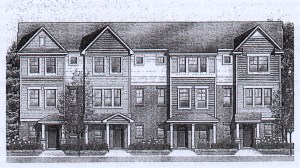
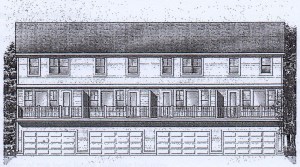
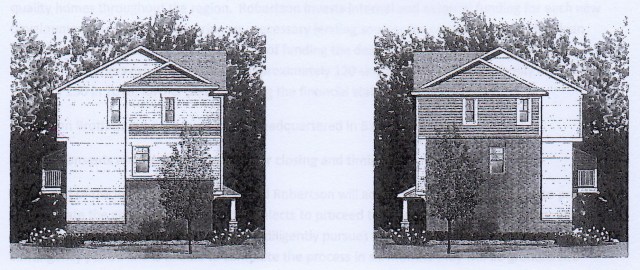
Robertson Brothers Homes, based out of Bloomfield Hills, submitted a $637,500 bid and plans to construct 51 upscale two- and three-bedroom townhouses on the site of the current school building and surrounding property.

robertson 2

Some of the units would face Thomas Street and include on-street parking, while others would face Shiawassee Park.

robertson 3  robertson 2 copy 3

The units would average 1,500 square feet.

robertson 2 copy 2

Also included in the conceptual site plan is space for a “potential future parking garage,” although its construction is not included in the proposal.

In addition, the purchase offer includes a strategy for demolition of the vacant Maxfield Training Center building, as well as a list of third-party consultants and contractors who would take part in the project.

MIXED USE

Livonia-based Blueduck Holdings, LLC submitted a $1.2 million purchase price and plans for a mixed-use development. It would include:

  • A three- or four-story building containing 150 luxury apartments, plus retail/office space
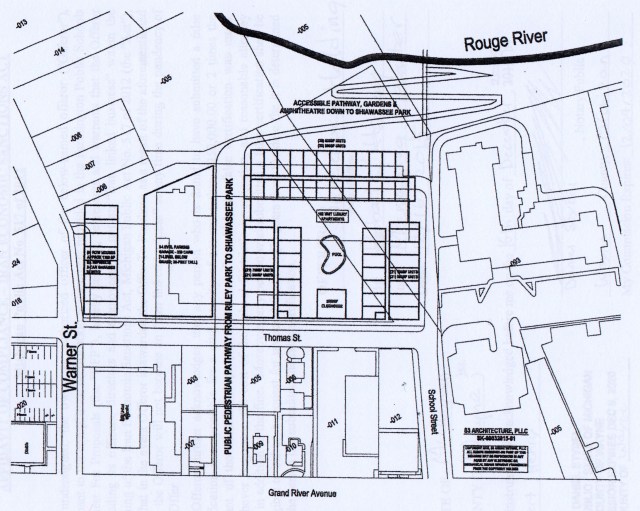
  • Up to eight single-family townhouses along Warner Street
  • A three-level, 250-car parking deck, with one level underground, for both apartment residents and additional downtown parking

blue duck 2

This proposal also includes acquiring two back-to-back residential properties, available for joint redevelopment at a price of $460,000, to create a public pedestrian pathway connecting Grand River to Shiawassee Park.

One of those properties is a 1904 Queen Anne house at 33104 Grand River, included in a recent petition circulated by Preservation Farmington and signed by some 450 residents of Farmington and the surrounding area.

THIS one

PRELIMINARY CITY FEEDBACK

Which of the bids gets accepted–if either–is up to Farmington Public Schools leadership. However, the school board would not agree to a deal that could not gain the approval of City of Farmington officials, according to a statement in the Oakland Press by Jon Riebe, Farmington Public Schools director of facilities.

Farmington City Council is considering offering incentives to the winner, the topic of discussion at a meeting on Saturday, January 9.

Of the two proposals, Blueduck’s is more consistent with redevelopment visions outlined in the Farmington Downtown Area Plan, but its lack of specific details left some council members wondering about the company’s financial commitment. “There’s no beef behind what he’s saying,” said council member Jeff Scott, adding that without any concrete information, “it’s just somebody’s pipe dream.”

Scott felt that the Robertson Brothers proposal, although “pretty generic,” was more realistic and ready to go, although he was hoping for higher density use and was concerned over the lack of a passageway to Shiawassee Park.

Council member Greg Cowley felt that “apartments are not in our best interest, long-term,” due to a large number of police calls that he said occur in apartment areas. At the same time, he said that Blueduck’s proposal was the “only one that really addresses a parking solution.”

Mayor Bill Galvin shared the concerns over funding, noting that Farmington officials had recently turned down Blueduck’s proposal for the vacant 47th District Courthouse property on 10 Mile Road when the developer backed out of the deal. Galvin’s impression of Robertson Brothers was that they build “high-end projects” that would attract the type of citizens Farmington is seeking. As noted in their proposal, the group has implemented similar projects in Troy and Royal Oak.

Council member Sara Bowman was concerned over the fact the only two proposals were received for such a prominent project. According to Economic and Community Development Director Kevin Christiansen, the property is still on the market. If neither project is accepted, city leadership will likely work with the schools to issue another request for proposals.

Council member Steve Schneemann, due to his professional involvement with Blueduck Holdings, was recused from the discussion.

–by Maria Taylor

Posted in Maxfield Training Center | Tagged , , , , | 1 Comment

VINTAGE POINT: Governor Warner Mansion

IMG_0688

Farmington’s iconic Governor Warner Mansion, built in 1867, wasn’t always white. The paint job, plus the signature wraparound porch, was added circa 1910 by Fred Warner, the home’s gubernatorial namesake.

33805 Grand River Avenue, Farmington

Historic photo from the Farmington Community Library Heritage Collection. Contemporary photo by Maria Taylor.


VINTAGE POINT is Preservation Farmington’s brand-new photo column, featuring an exclusive focus on Farmington history: a look at our city through the lens of time.

Farmington was founded in 1824. In the close to two centuries since then, what was once the Village of Farmington has evolved into what it is today: a city that retains reminders of its past as it moves forward into the 21st century. 192 years is a lot of history. Have you ever walked through the downtown and wondered, “What was there?” What did Governor Fred Warner see when he walked down his front steps in 1900? What kinds of businesses have operated in the Downtown Farmington Center? (Hint: One was Fred Warner’s cheese factory.)

What has changed–and what’s stayed the same?

Vintage Point aims to uncover just that with a side-by-side comparison format: old photos of Farmington in years gone and new photos showing the Farmington of today, taken at exactly the same angle. We hope you enjoy this peek into the past!

Look for Vintage Point every other week in the Farmington Observer and Farmington Voice and on our Facebook and Twitter pages. We’ll also keep an archive of all past issues on our website under the Vintage Point tab.

Posted in Vintage Point | Tagged , , , , | Leave a comment

Welcome to Preservation Farmington

Redevelopment and historic preservation, and how the two intersect, are hot topics in the city of Farmington. Over the past few months, we’ve seen redevelopment plans that threaten hundred-year-old houses, a petition to save them, and discussions of parking space versus historic buildings. We’ve been told by Main Street Oakland County that our town is on the verge of tremendous growth…if these issues are addressed.

We’ve also been told by that same organization that the city needs to work on community involvement in their plans for Farmington’s future.

That’s where we come in.

One of Preservation Farmington’s major goals is to keep residents in the know about what’s happening on the downtown history scene, and provide opportunities for the general public to make their voices heard on subjects that are important to them–among them, maintaining the historic character of Farmington’s downtown. We believe that many people care deeply about the subject, especially when it involves irreversibly altering long-standing buildings that have been part of the downtown landscape for decades.

To this end, we’ve created this website as a resource for history-conscious citizens, and all who are invested in the future of the Farmington community. On it, you’ll find links to Farmington city plans, a listing of local historical groups and organizations, history-related sites to visit and Facebook pages to follow, and suggestions for how to get involved in the Farmington history scene–to whatever extent you prefer.

We hope you’ll join us in the ongoing quest to #SaveFarmingtonsCharacter.

Posted in Uncategorized | Tagged , , , | Leave a comment